
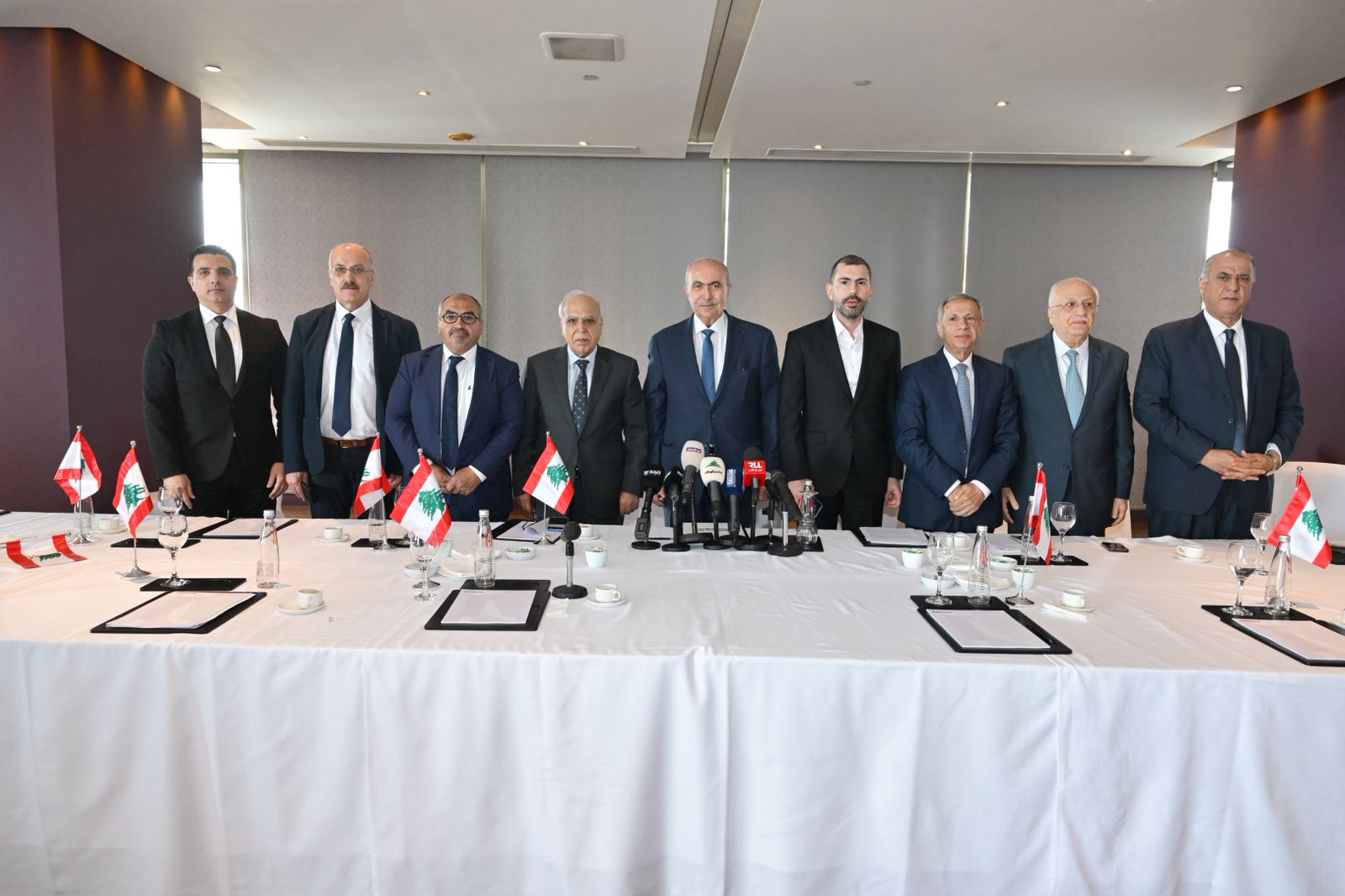
Members of Parliament held a consultative meeting dedicated to discussing ways to halt the deterioration and establish a practical course of action to protect the country and safeguard its future, amid the critical and dangerous phase Lebanon is experiencing, with innocent lives continuing to be lost, cities being destroyed, and threats to national stability escalating.
The participants affirmed the following:
First: Upholding the Constitution and the Taif Agreement, in both letter and spirit, as a unifying framework that safeguards stability and governs political life. The Agreement was reached under the auspices of, and with a pivotal role played by, the Kingdom of Saudi Arabia. The participants also emphasized that, in times of crisis, the state and its institutions are the only recourse. They expressed their support for the government headed by Prime Minister Nawaf Salam in implementing its decisions, particularly those adopted on August 5 and 7, 2025, and March 2, 2026. They stressed the need to move from declarations to full implementation, including placing all weapons, without exception, under the exclusive control of the state.
Second: Supporting the state’s approach and decision to negotiate with Israel within the constitutional framework, with the aim of ending the war and shielding Lebanon from its repercussions while safeguarding the supreme national interest. The participants emphasized the ongoing coordination between the Presidency of the Republic and the government, while reaffirming key principles, foremost among them that decisions of war and peace must remain exclusively in the hands of the state, the recovery of all Lebanese territory, securing the return of detainees, and completing the final demarcation of the borders.
Third: Condemning Israeli attacks targeting military personnel, civilians, journalists, civil defense personnel, and medical teams, and rejecting all violations of international law that harm human beings or humanitarian infrastructure. At the same time, the participants stressed the need to strengthen the role of the Lebanese Army and security forces, extend state authority throughout Lebanese territory, and support the declaration of Beirut as a city free of weapons.
Fourth: Recognizing that Lebanon has a genuine opportunity to benefit from international support for reconstruction and for improving economic and financial conditions, provided that the state fully assumes its responsibilities. Priority must be given to living conditions and social needs to ensure citizens’ stability and promote balanced development across the country.
Fifth: Emphasizing the importance of preserving national unity and coexistence, and rejecting any inflammatory or confrontational rhetoric, in order to uphold national principles and strengthen unity.
Sixth: Calling for the adoption of a fair and comprehensive general amnesty law that ensures justice and equality, alongside strengthening the rule of law and applying it to everyone without exception.
In this context, the participants also stressed the importance of the Arab dimension in supporting Lebanon’s stability, commending the role of Arab brotherly nations, particularly the Kingdom of Saudi Arabia, for its support for the Lebanese state and its institutions.
The statement concluded by affirming that the way forward is clear: consolidating the authority of the state, implementing its decisions, placing all weapons under its exclusive control, advancing negotiations, and leveraging international support to rebuild Lebanon and restore its role. The participants also emphasized the importance of holding these meetings regularly.