
President of the National Dialogue Party, MP Fouad Makhzoumi, stressed that the reform paper issued by the Cabinet at its meeting today in Baabda had undoubtedly introduced some new measures aimed at moving closer to the reforms needed for the 2020 budget. However, he said, the fundamental issue was the lack of trust in the political class responsible for the country’s affairs, as represented by the current government.
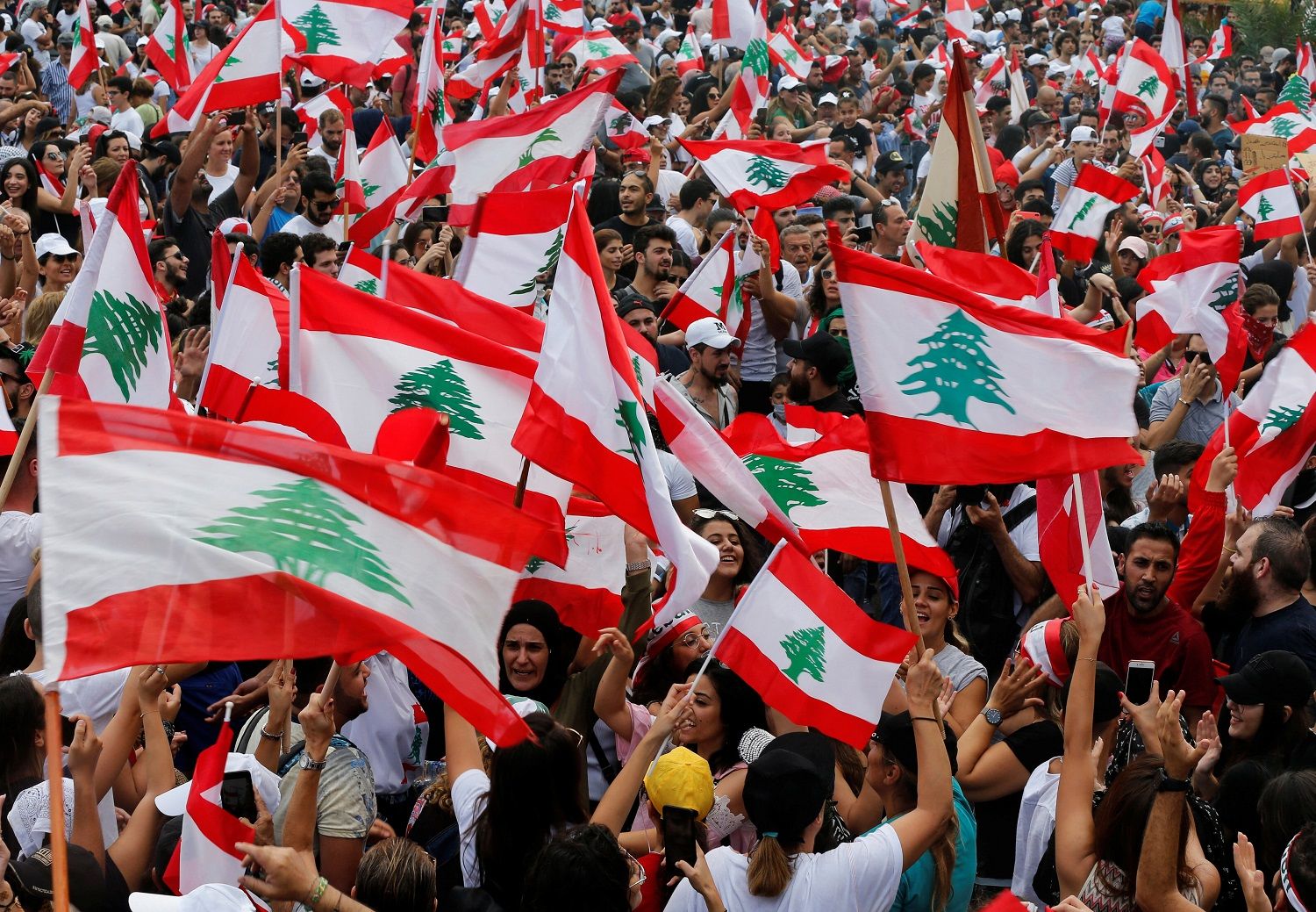
He said that people had no confidence that the reform paper would be implemented. They had remained in the streets for five days, demanding the resignation of the current government, the formation of a national transitional government free from existing political alignments, and the recovery of embezzled public funds. These steps, he said, were what could give people their due rights, restore hope that the course of reform could be corrected, and have a genuinely positive impact on the economy.
Makhzoumi said there was no doubt that pressure from the streets had brought about some new developments. He questioned why the government had not included the concessions it had announced in the 2020 budget before people took to the streets, describing the government as a failure.
He noted that the reform paper made no mention of specific budget figures, stating only that the deficit would be zero. He questioned how the deficit would be covered and where the necessary funds would come from. He added that no minister, director, or corrupt official had been dismissed, meaning that those responsible for corruption would be overseeing the reform process. He also pointed out that imposing a tax on banks for just one year was insufficient.
Makhzoumi further highlighted the absence of any discussion of ending the allocation of public-sector positions on the basis of political and sectarian quotas. He also questioned why the paper did not include measures to control unofficial border crossings and smuggling, which he said was estimated to exceed $600 billion.
He stated that the damage caused by the current and successive governments could not be repaired through piecemeal policies. The Lebanese people, he said, were now looking for genuine and tangible change to save Lebanon from the fate brought about by misguided economic and financial policies, as well as waste and corruption.
He ruled out the possibility that this reform paper would restore public confidence in officials who had failed to manage the country and reassure citizens, ultimately bringing them to such a severe state of economic and living hardship.
Makhzoumi stressed that the government had lost its legitimacy in the streets and that a state of emergency needed to be declared. He called for cooperation to form a transitional government composed of specialists, economists, and qualified professionals, and for a fair electoral law based on proportional representation and consistent with the spirit of the Taif Agreement.
While insisting that early parliamentary elections must be held, he stressed that there must be absolutely no return to an electoral law tailored to suit the political class that the people have rejected.
He concluded by saying that the reform paper could be regarded as a determined continuation of the policy of failure and inaction. “In short, the people have moved ahead of you, and you should have caught up with them. The catastrophe is that when corruption combines with paralysis, national affairs spill into the streets, with all their positive and negative consequences. Beware of chaos. May God protect Lebanon and the Lebanese people.”