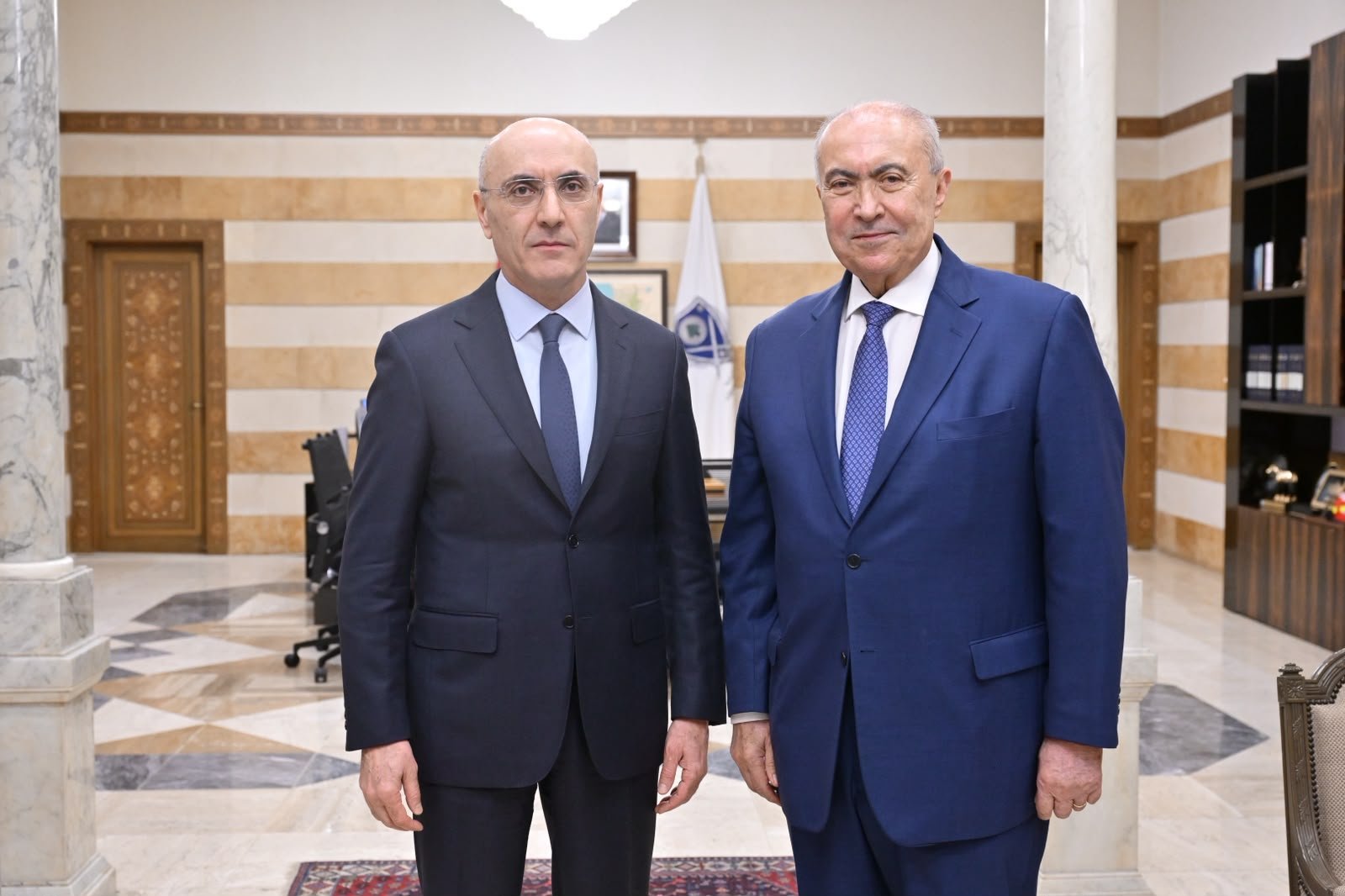
President of the National Dialogue Party and MP Fouad Makhzoumi visited Minister of Interior and Municipalities Ahmad Al-Hajjar. Discussions covered the overall situation in the country, recent local and regional developments, and their implications for Lebanon.
Makhzoumi stressed the importance of continuing to implement the state’s strategy, under the leadership of President of the Republic General Joseph Aoun and the government, to ensure that weapons remain exclusively in the hands of the state and extend its authority throughout Lebanese territory. He also emphasized the need to begin implementing the agreed-upon measures concerning the designated pilot zones, in a way that strengthens security and stability, lays the groundwork for restoring public confidence in the state, and sets the recovery and reform process in motion.
Makhzoumi noted that the meeting also addressed the escalating crises facing Beirut, particularly those related to water, electricity, waste management, and essential services. He stressed that the capital’s deteriorating situation can no longer withstand further delays or temporary solutions, and that saving Beirut is a national responsibility shared by all Lebanese state institutions.
He emphasized the need for immediate executive decisions and a clear action plan with a defined timetable to address the waste crisis sustainably, improve water and electricity services, put an end to encroachments on public property, and strengthen the role of Beirut Municipal Police in enforcing the law and maintaining public order. These measures, he noted, are essential to restoring the capital’s right to modern governance and services worthy of its residents.
Makhzoumi reaffirmed the commitment of the Makhzoumi Foundation to continuing its support for all initiatives that serve Beirut and improve the quality of life of its residents. He emphasized that this commitment stems from the firm belief that development is first and foremost the responsibility of the state, and that effective partnerships between the state, the private sector, and civil society are essential to accelerating recovery, promoting sustainable development, and restoring the capital’s leading role.
Makhzoumi concluded by stressing that this stage requires moving from identifying problems to implementing solutions and swiftly translating plans and decisions into practical, tangible action. He affirmed that the state’s success in addressing security, public service, and reform challenges is the real foundation for restoring citizens’ confidence in the state, consolidating stability, and putting Lebanon on the path toward comprehensive recovery.