
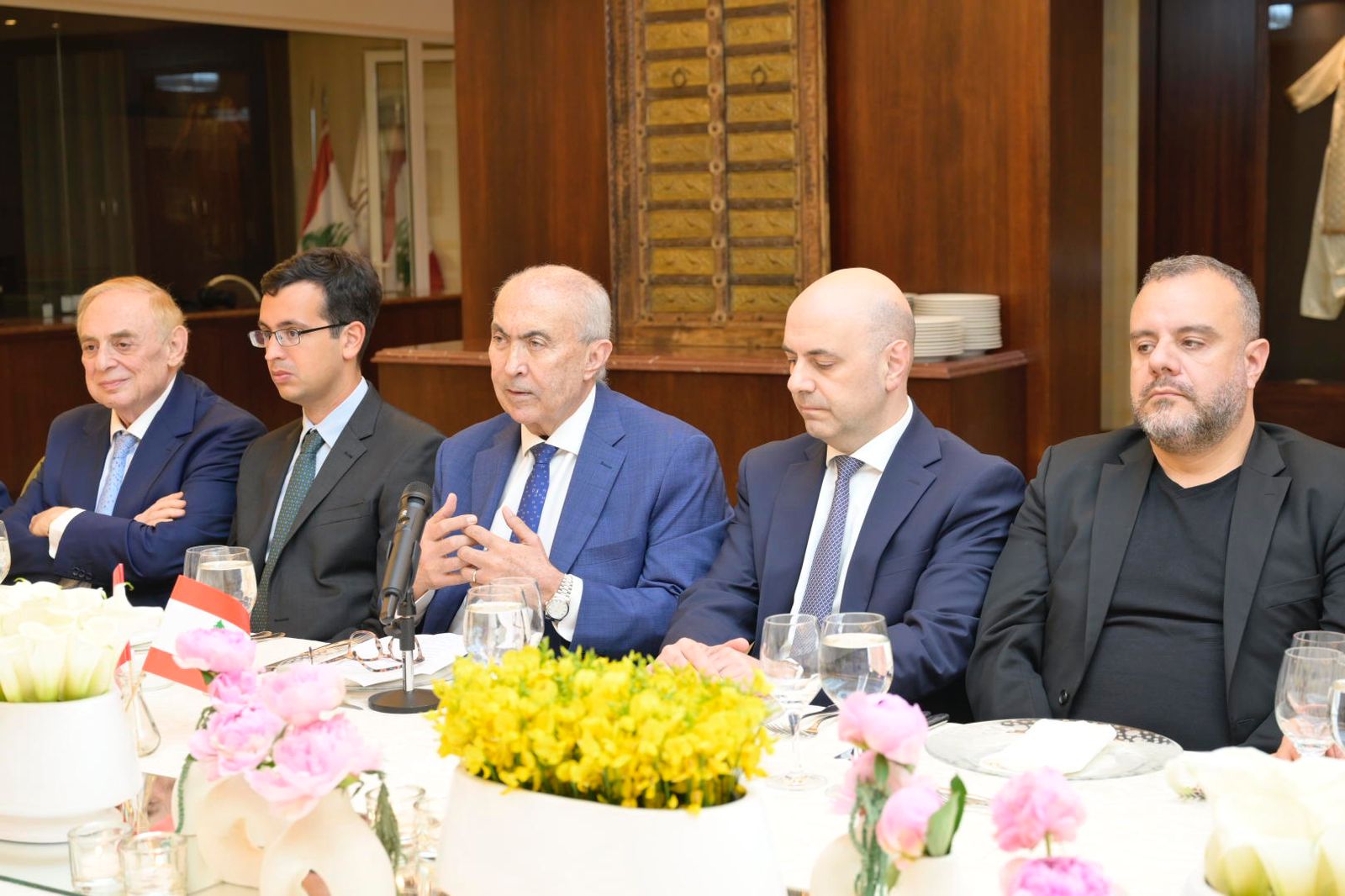
A group of MPs representing most parliamentary blocs met with a delegation from the International Monetary Fund (IMF) at MP Fouad Makhzoumi’s residence. Discussions covered several issues, including the agreement between Lebanon and the IMF and the reforms required to help the country recover.
Addressing the delegation, MP Makhzoumi stressed that the failure to pass reforms was a collective responsibility shared by the government, Banque du Liban, and Parliament. He said that one of the key issues requiring a solution was that of depositors, which must be addressed without populism or irrationality. This would require practical measures aimed at returning the largest possible share of funds to depositors, addressing legitimate deposits, and securing the financing needed to cover them.
He emphasized that the purpose of the agreement with the IMF was neither to dispose of the crisis of funds trapped in banks nor to wipe out depositors’ money, contrary to what has been circulated. He added that IMF officials had confirmed that the claims circulating about this issue were unfounded.
Makhzoumi also held an extensive and detailed discussion with several MPs on the bank restructuring law, describing it as a cornerstone of reform, economic recovery, restoring confidence in the banking sector, and reviving economic activity. The participants reviewed the draft law, which remains with the government and has not yet been submitted to Parliament. They highlighted shortcomings in the draft and discussed the IMF’s position on it.
The meeting also addressed the banking secrecy law. Participants agreed that reforms could not begin without lifting banking secrecy. MP Makhzoumi noted that he had submitted a draft law to amend the banking secrecy legislation, which the IMF had reviewed and welcomed in terms of its substance.
Those present also raised the issue of redistributing the losses resulting from the mismanagement of monetary and banking policies among the state, commercial banks, and Banque du Liban. Discussions with IMF officials focused on a comprehensive approach to resolving the crisis, including bank restructuring, options for restructuring public debt, establishing short- and long-term priorities for a gradual resolution, and the gradual recapitalization of Banque du Liban by the state to an acceptable level. They also stressed the need to begin public-sector reforms without delay.
The participants noted that the financial gap was enormous and that addressing it would require courage and thinking beyond conventional solutions.
Those present agreed that small depositors could be fully protected, while a solution for larger depositors could be provided to a certain extent. They also expressed concern that Lebanon might be placed on the Financial Action Task Force (FATF) grey list, which would further exacerbate the country’s financial and banking difficulties.
Regarding bank restructuring, they stressed the need to proceed as quickly as possible, approach the issue from a technical perspective, and develop solutions to the worsening crisis facing depositors.